


What is conservation agriculture?
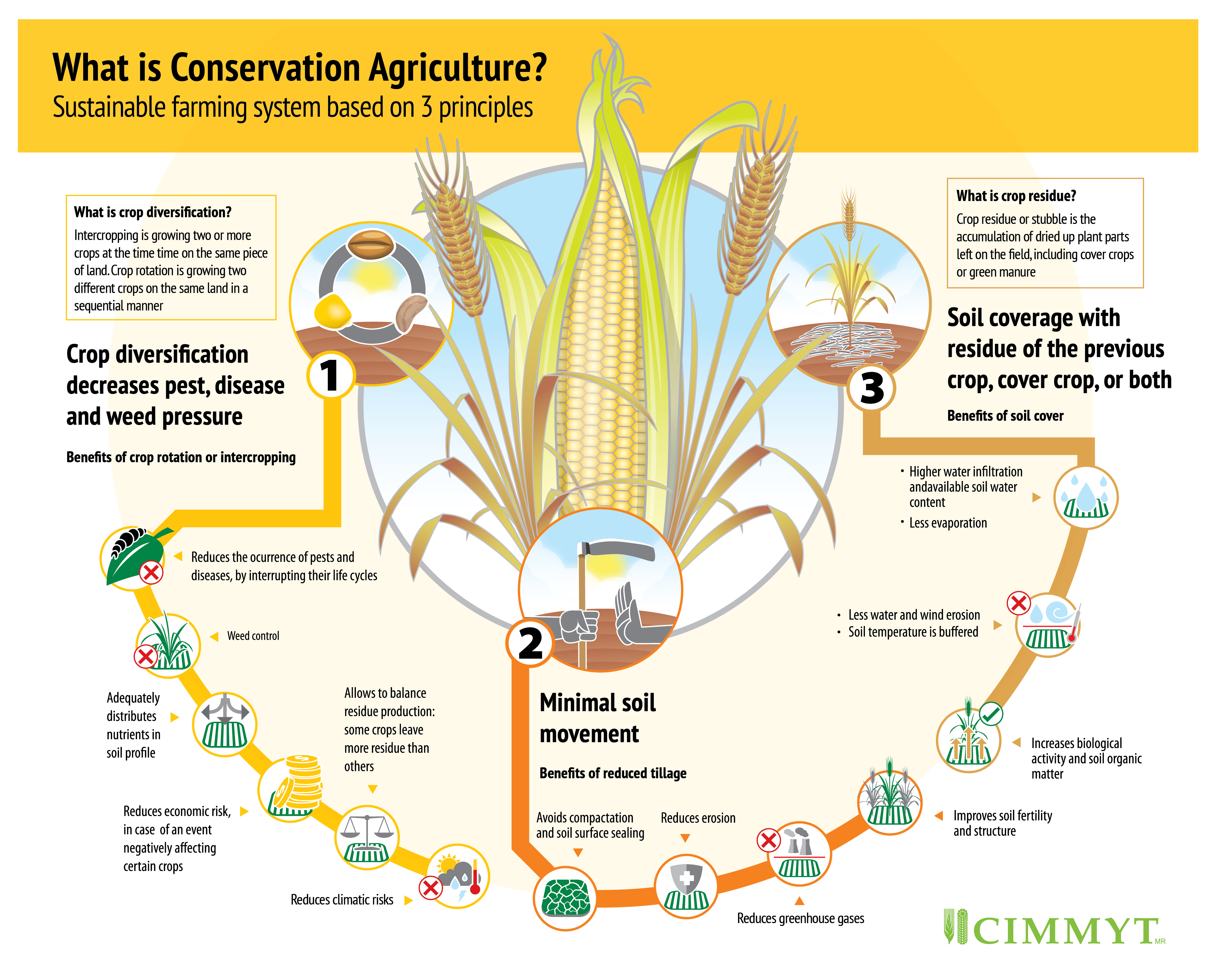
Farmers are increasingly adopting conservation agriculture practices. This sustainable farming method is based on three principles: crop diversification, minimal soil movement and permanent soil cover.
Conservation agriculture (CA) is a farming system that promotes sustainable agriculture by minimizing soil disturbance, maintaining a permanent soil cover, and diversifying crop species. It enhances biodiversity and natural biological processes, leading to increased water and nutrient use efficiency and improved crop production. The core principles of CA are minimum tillage, permanent soil cover, and crop rotation.
If not practiced sustainably, agriculture can have a toll on the environment, produce greenhouse gases and contribute to climate change. However, sustainable farming methods can do the opposite — increase resilience to climate change, protect biodiversity and sustainably use natural resources.
One of these methods is conservation agriculture.
Conservation agriculture conserves natural resources, biodiversity and labor. It increases available soil water, reduces heat and drought stress, and builds up soil health in the longer term.
What are the principles of conservation agriculture?
Conservation agriculture is based on the interrelated principles of minimal mechanical soil disturbance, permanent soil cover with living or dead plant material, and crop diversification through rotation or intercropping. It helps farmers to maintain and boost yields and increase profits, while reversing land degradation, protecting the environment and responding to growing challenges of climate change.
To reduce soil disturbance, farmers practice zero-tillage farming, which allows direct planting without plowing or preparing the soil. The farmer seeds directly through surface residues of the previous crop.
Zero tillage is combined with intercropping and crop rotation, which means either growing two or more crops at the same time on the same piece of land, or growing two different crops on the same land in a sequential manner. These are also core principles of sustainable intensification.
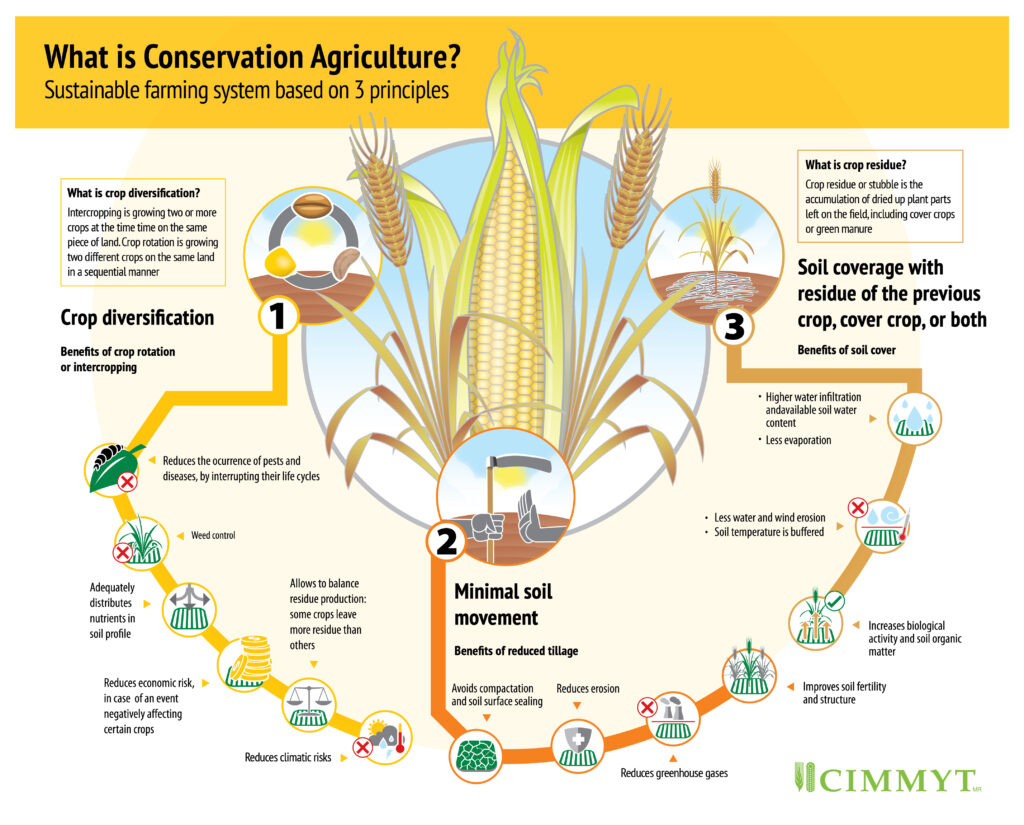
Here’s a more detailed look:
Key Principles of Conservation Agriculture:
- Minimum Soil Disturbance (No-Till):
This involves reducing or eliminating tillage, which can disrupt soil structure, reduce organic matter, and increase erosion.
- Permanent Soil Cover:
Maintaining a layer of crop residues or cover crops on the soil surface helps protect the soil from erosion, retains moisture, suppresses weeds, and improves soil health.
- Crop Rotation:
Rotating different crops helps break pest and disease cycles, improves soil structure, and enhances nutrient cycling.
Benefits of Conservation Agriculture:
- Improved Soil Health:
CA enhances soil structure, organic matter content, and nutrient availability.
- Increased Water Use Efficiency:
By reducing soil disturbance and maintaining a soil cover, CA helps retain soil moisture and reduces water runoff.
- Reduced Erosion:
Minimum tillage and permanent soil cover protect the soil from wind and water erosion.
- Reduced Labor and Input Costs:
CA can be less labor-intensive than conventional agriculture, and may reduce the need for fertilizers and pesticides.
- Increased Biodiversity:
CA can promote a more diverse range of soil organisms and plant species.
- Improved Climate Resilience:
CA practices can help make agriculture more resilient to climate change impacts like drought and extreme weather events.
- Reduced Greenhouse Gas Emissions:
By minimizing soil disturbance and improving nutrient use efficiency, CA can contribute to reducing greenhouse gas emissions from agriculture.
Conservation Agriculture in Rwanda:
The Rwanda Institute for Conservation Agriculture (RICA) is a key institution promoting CA in Rwanda. RICA focuses on equipping students with the knowledge and skills to implement CA practices and contribute to sustainable agricultural development in Rwanda.
In summary, conservation agriculture is a sustainable approach to farming that aims to improve soil health, increase resource use efficiency, and enhance the resilience of agricultural systems.

Leave a Reply